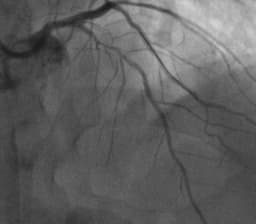
Understanding Coronary Angioplasty
Coronary Angioplasty is a minimally invasive procedure used to open blocked coronary arteries caused by atherosclerosis. It restores blood flow to the heart and reduces the risk of heart attack.
Minimally Invasive
No major surgery requiredFew Hours Discharge
Radial approach recoveryDrug-Eluting Stents
Reduced restenosis riskWhy Angioplasty Is Preferred
- Improves blood flow instantly
- Lower recovery time
- Prevents heart attack progression
- Avoids open-heart surgery in many cases
What Causes Blockage?
Atherosclerosis causes plaque buildup inside coronary arteries, narrowing them and restricting oxygen-rich blood supply to the heart muscle.
How The Procedure Works
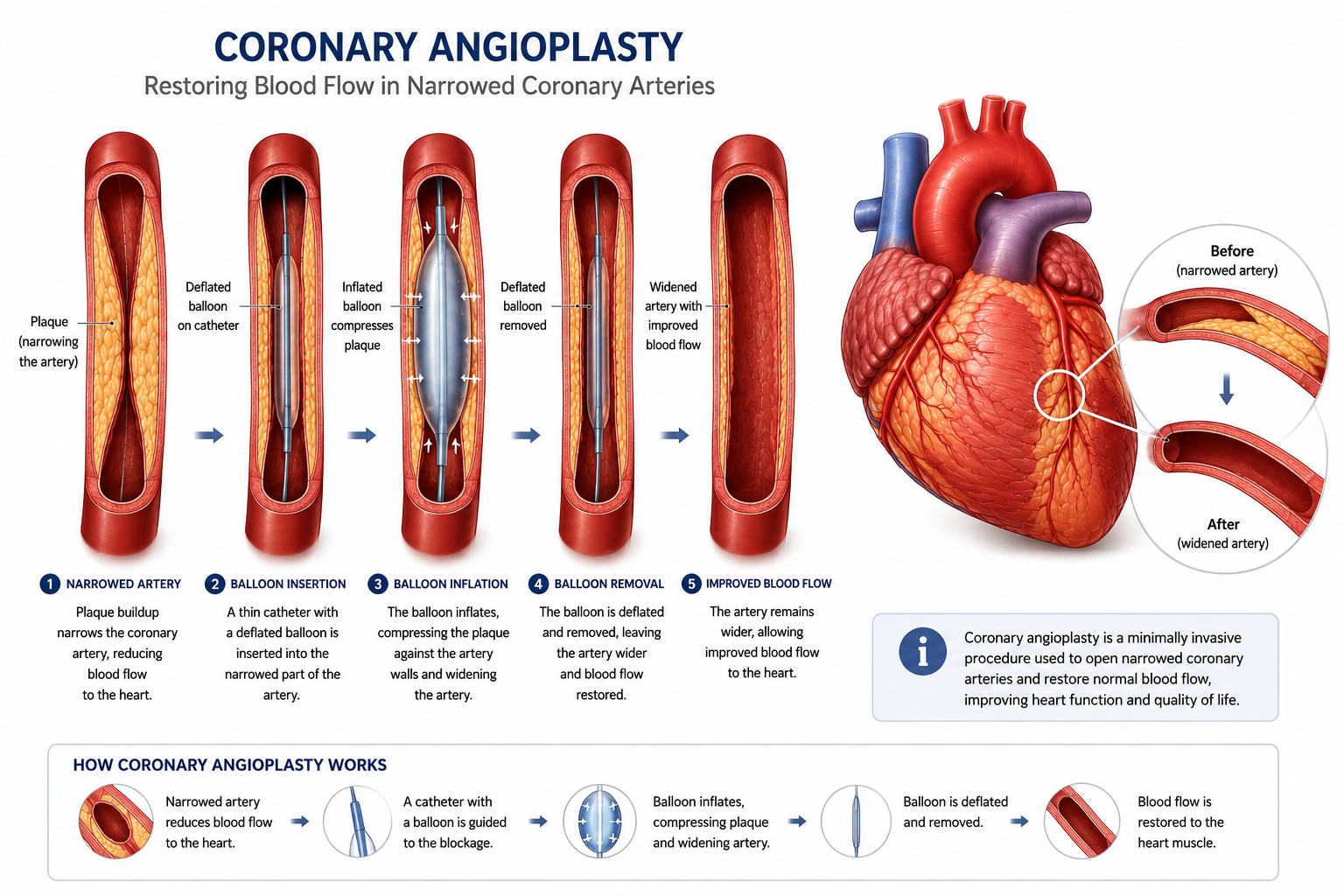
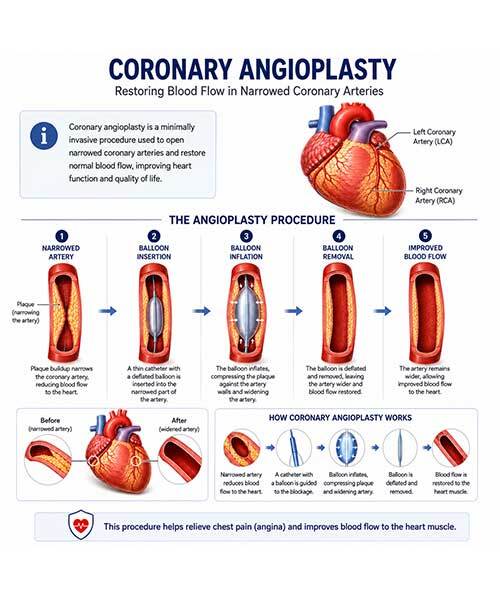
A balloon catheter is inserted through the femoral artery (groin) or radial artery (wrist) and guided to the blockage. The balloon is inflated to widen the narrowed artery.
Role of Coronary Angiography
Coronary angiography maps the anatomy of coronary arteries and helps identify the exact location and severity of blockages before angioplasty.
Procedure & Stent Technology
Balloon Angioplasty
A coronary balloon dilates the stenosed artery, restoring blood flow and preparing the site for stent placement.
Metallic Stents
Stents are metallic mesh tubes (usually stainless steel) that act like scaffolding to keep arteries open after balloon dilation.
Drug-Eluting Stents
Modern stents are coated with medications such as Rapamycin or Paclitaxel, significantly reducing restenosis and re-blockage.
Radial vs Femoral Approach
The radial (wrist) approach allows early mobilization and discharge within hours, unlike the traditional femoral (groin) approach requiring longer bed rest.
Current Indications for Coronary Angioplasty
- Unstable Angina / Acute Coronary Syndrome
- Acute Myocardial Infarction (Heart Attack)
- Angina after Myocardial Infarction
- Narrowed grafts after bypass surgery
- High surgical risk patients (elderly, renal failure, emphysema)
- Multivessel disease in patients avoiding surgery
⚠️ Early Intervention Saves Heart Muscle
With modern drug-eluting stents, coronary angioplasty has become the preferred treatment for most coronary artery disease cases surgery is considered only when angioplasty is not technically feasible.
Coronary Angioplasty – Case Study