
01
Ultrasound Guided
Duplex ultrasound helps the specialist identify the target vein, understand its anatomy and guide catheter placement during treatment.
Steam Ablation uses controlled thermal energy delivered through a fine catheter to treat problematic veins while keeping the treatment minimally invasive.
Treatment is performed under ultrasound guidance, allowing the specialist to carefully identify the target vein, position the catheter and deliver controlled thermal energy.
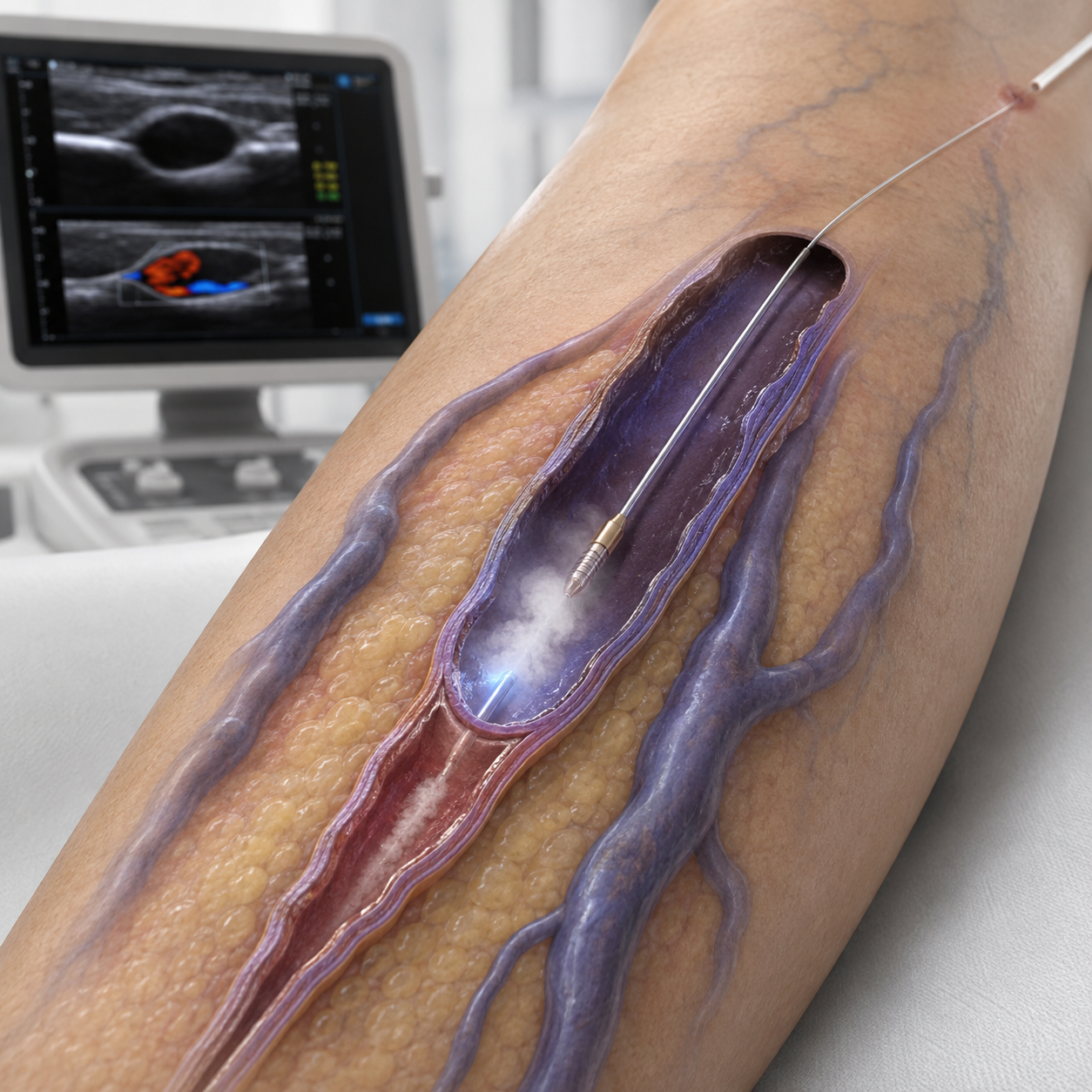
Endovenous Steam Ablation is a minimally invasive thermal technique designed to close selected problematic veins from within.
Duplex ultrasound helps the specialist identify the target vein, understand its anatomy and guide catheter placement during treatment.
Small pulses of steam are delivered through a catheter to create a controlled thermal effect along the treated vein.
Rather than surgically removing the vein, the treatment works from within the vessel and allows blood to redirect through healthier veins.
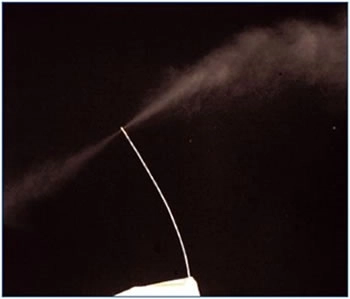
Instead of removing a problematic vein surgically, a thin catheter is introduced into the target vessel.
Controlled pulses of steam are delivered while the catheter is gradually withdrawn through the treated section.
The thermal effect causes the vein wall to contract and close. Blood can subsequently redirect through healthier veins.
Treatment planning typically begins with a detailed clinical assessment and duplex ultrasound examination.
Steam Ablation is built around identifying the problematic vein, delivering controlled thermal energy and allowing the body to gradually adapt after the vein has closed.
Steam Ablation treats the vein internally rather than removing it through conventional surgery. A catheter delivers controlled thermal energy directly to the vessel wall.
The technique combines minimally invasive access, imaging guidance and controlled thermal delivery.
Treatment is performed through a small catheter rather than conventional surgical vein removal.
Imaging allows the treatment team to visualize the target vein throughout the procedure.
The procedure can generally be performed using local or tumescent anesthesia according to clinical requirements.
Steam Ablation is designed as a minimally invasive treatment that can commonly be performed without hospital admission.
Patients are generally encouraged to walk after treatment according to their specialist's instructions.
Steam is delivered directly through a catheter, allowing controlled treatment of the problematic vein.
Each stage is performed with careful imaging guidance and controlled thermal delivery.
The target vein is identified and accessed under ultrasound guidance. This allows the treating specialist to visualize the vein and establish precise catheter entry.
Ultrasound imaging helps identify the anatomy of the vein and allows the treatment team to monitor the procedure throughout.
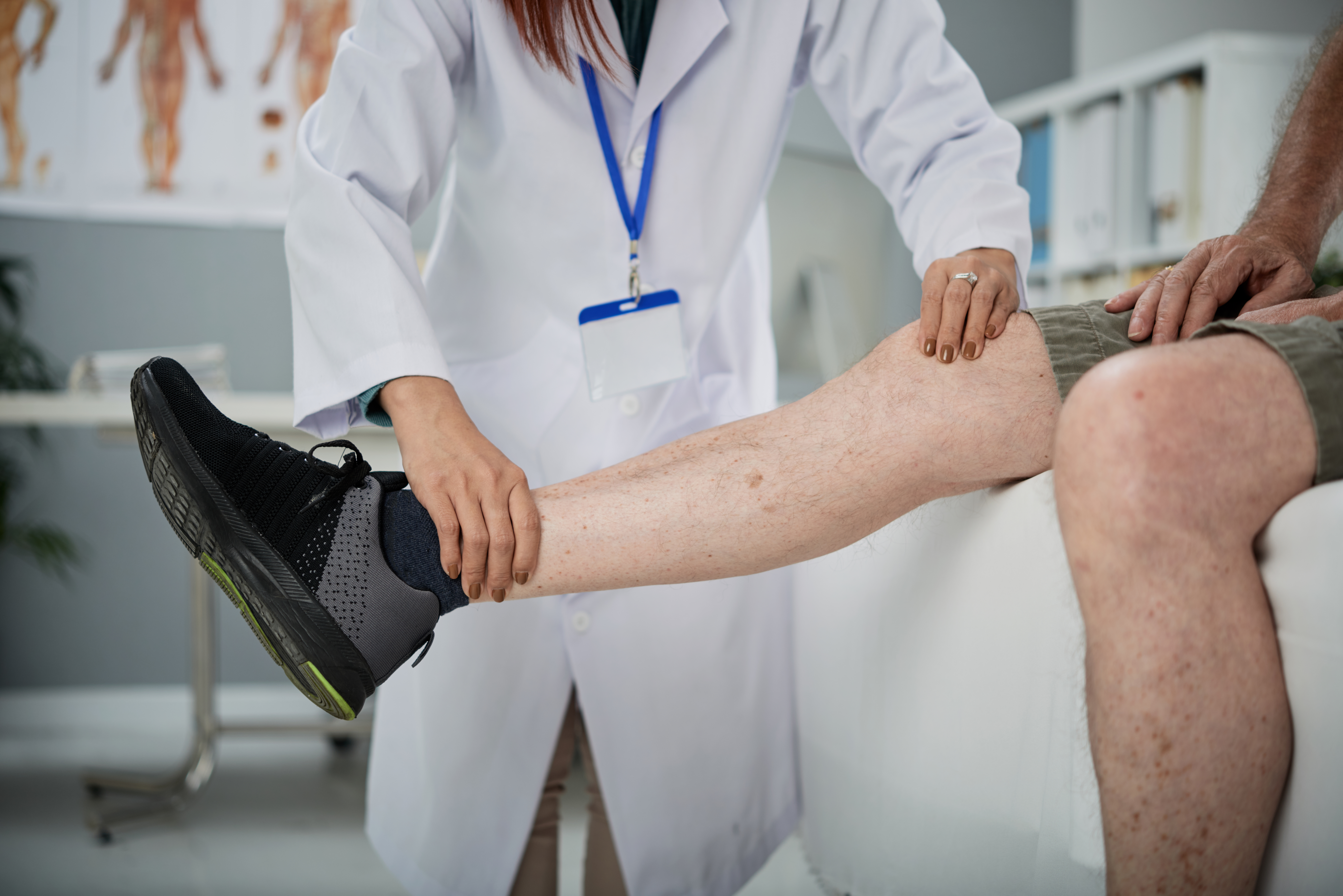
Steam Ablation is not automatically the best treatment for every person with varicose veins.
A vascular specialist should assess the underlying venous problem, symptoms and ultrasound findings before recommending an appropriate treatment strategy.
Detailed clinical evaluation
Duplex ultrasound assessment
Assessment of vein anatomy
Individualized treatment planning
Recovery varies between individuals, but the minimally invasive nature of treatment generally allows an early return to movement.
Patients are generally encouraged to walk shortly after treatment, according to their specialist's instructions.
Normal daily movement is usually encouraged while strenuous activities may be limited temporarily.
Compression recommendations and activity progression depend on your individual recovery and clinical assessment.
Compression therapy, activity restrictions and follow-up schedules vary between patients. Always follow the specific instructions provided by your treating specialist.
Steam Ablation is an evolving approach in vein therapy. While the technique offers an interesting thermal treatment option, published clinical evidence remains more limited than for some established endovenous techniques.
Treatment suitability should therefore be assessed individually by an experienced vascular specialist rather than determined solely by the presence of varicose veins.
Understanding the treatment before your consultation can help you have a more informed conversation with your specialist.
Endovenous Steam Ablation (EVSA) is a minimally invasive thermal technique in which controlled steam energy is delivered through a catheter positioned inside a problematic vein. The heat causes the vein to contract and close.
The procedure is generally performed using local or tumescent anesthesia. You may experience pressure, warmth or mild discomfort during parts of the procedure, but the treatment is designed to minimize discomfort.
Recovery varies between patients and depends on the extent of treatment and individual health factors. Many patients are encouraged to walk soon after the procedure and gradually return to normal activities.
Compression therapy may be recommended after treatment. The duration and type of compression should be determined by your treating specialist based on your individual circumstances.
No. Suitability depends on the anatomy and condition of the veins, symptoms, previous treatments and overall clinical assessment. Duplex ultrasound and specialist evaluation are typically important before deciding on treatment.
Steam Ablation is a minimally invasive endovenous procedure rather than conventional open vein surgery. A catheter is introduced into the vein and thermal energy is delivered internally.
Every vein condition is different. Start with a specialist assessment and understand which treatment may be appropriate for you.