Introduction
Varicose veins are a common condition that affects many people, often causing discomfort, heaviness, and visible bulging in the legs. While medical treatments are available and highly effective, some people prefer to try natural remedies first, especially in the early or mild stages of the condition.
In this article, we explore natural remedies for varicose veins, including home remedies and DIY treatments, as explained by Dr. Shoaib Padaria, one of India's leading Vein Specialists. We also discuss some approaches from Homeopathy, Ayurveda, and Unani medicine that are commonly used alongside conventional care.
Can Natural Remedies Really Help?
It's important to set realistic expectations from the start. Natural remedies and home-based approaches can help ease symptoms such as heaviness, mild swelling, and discomfort, and may slow the progression of early-stage varicose veins. However, they cannot shrink, remove, or reverse veins that have already become significantly enlarged or twisted.
For mild cases, these remedies can be a useful first step. For moderate to severe varicose veins, they work best as a complement to medical treatment rather than a replacement for it. As always, it's best to consult a healthcare provider before starting any new remedy, especially herbal or alternative treatments that may interact with existing medications.
Natural Remedies for Varicose Veins
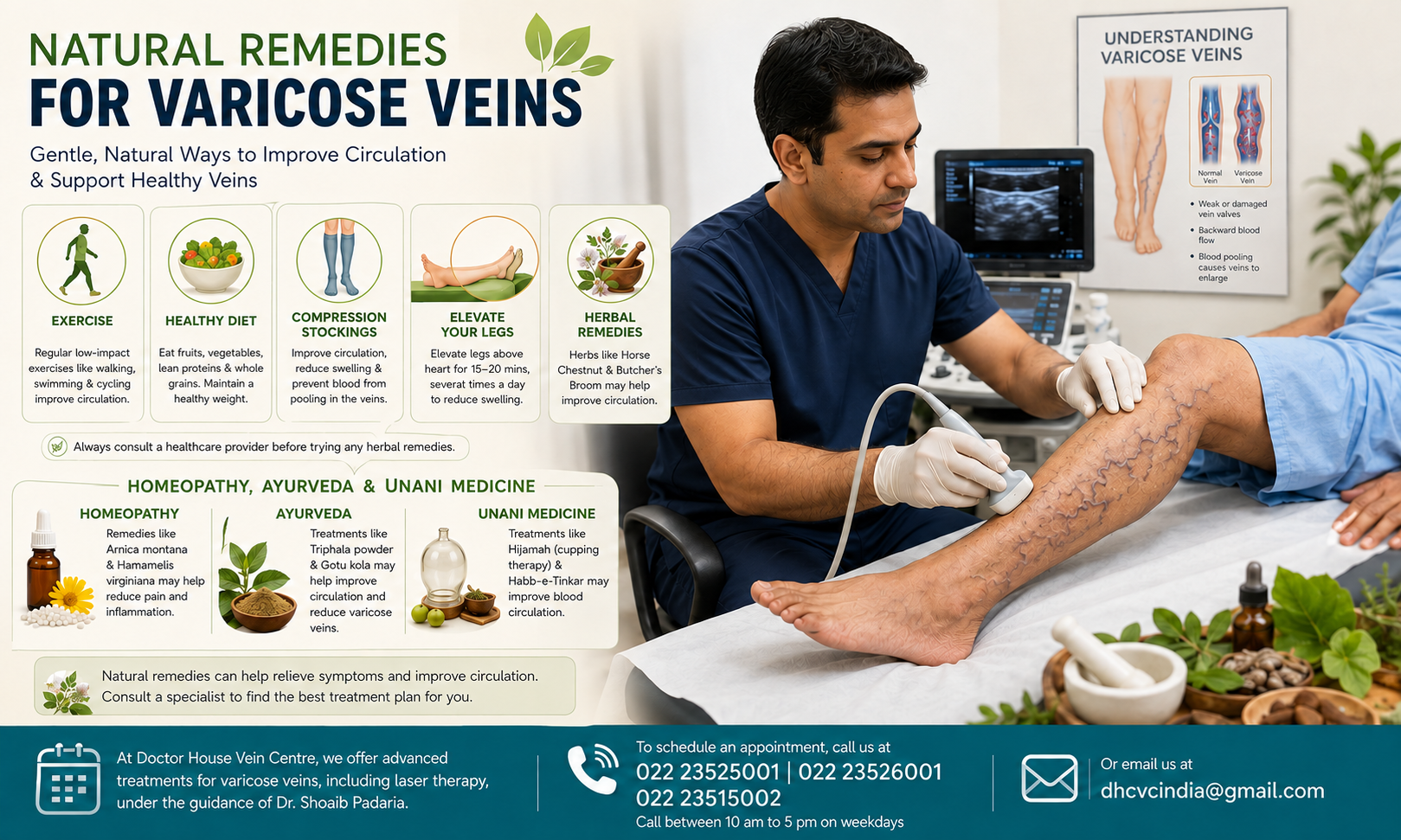
Exercise: Regular exercise can help improve circulation in the legs and reduce the risk of varicose veins. Low-impact exercises like walking, swimming, and cycling are great options for people with varicose veins, as they activate the calf muscles without placing excessive strain on the leg veins.
Maintain a healthy diet: Eating a healthy diet that is rich in fruits, vegetables, lean proteins, and whole grains can help you maintain a healthy weight and reduce your risk of varicose veins. Reducing salt intake also helps limit water retention and swelling in the legs.
Compression stockings: Compression stockings are a type of tight-fitting hosiery that help improve circulation in the legs. They work by applying pressure to the legs, which helps to reduce swelling and prevent blood from pooling in the veins, offering meaningful day-to-day relief.
Elevate your legs: Elevating your legs can help improve circulation in the legs and reduce swelling. Try to elevate your legs above your heart for 15–20 minutes several times a day, particularly after long periods of standing or sitting.
Herbal remedies: Some herbs, such as horse chestnut and butcher's broom, may help improve circulation in the legs and reduce the appearance of varicose veins. Horse chestnut extract, in particular, has been studied for its potential to strengthen vein walls and reduce swelling. However, it's important to talk to a healthcare provider before using any herbal remedies, as they can interact with blood thinners and other medications.
Homeopathy, Ayurveda, and Unani Medicine
Beyond conventional home remedies, several traditional systems of medicine offer their own approaches to managing varicose vein symptoms. These are widely practiced in India and are often used by patients seeking complementary or alternative options alongside modern vein care.
Homeopathy: Homeopathic remedies like Arnica montana and Hamamelis virginiana may be helpful for reducing pain and inflammation associated with varicose veins. These remedies are typically selected based on the individual's specific symptoms and are usually administered under the guidance of a qualified homeopathic practitioner.
Ayurveda: Ayurvedic treatments like Triphala powder and Gotu kola may help improve circulation in the legs and reduce the appearance of varicose veins. In Ayurvedic practice, these herbs are often recommended alongside dietary adjustments and lifestyle routines aimed at balancing overall circulatory health.
Unani Medicine: Unani treatments like Hijamah (cupping therapy) and Habb-e-Tinkar may help improve blood circulation and reduce the appearance of varicose veins. Hijamah, in particular, is a traditional cupping technique believed to draw stagnant blood away from affected areas, though its effects on varicose veins specifically should be discussed with a qualified Unani practitioner.
Important Precautions
While natural and traditional remedies can offer symptomatic relief for some patients, it's essential to approach them with the same caution as any other treatment. Herbal supplements are not regulated the same way as pharmaceutical medications, and their quality, dosage, and purity can vary significantly between products and manufacturers.
It's also important to avoid self-diagnosing or delaying medical evaluation in favor of home remedies alone, particularly if symptoms are worsening or if you notice signs such as skin discoloration, ulceration, or persistent swelling. These signs suggest the condition has progressed beyond what lifestyle or natural remedies alone can manage.
When to Seek Professional Medical Care
Natural remedies work best when symptoms are mild and the goal is simply comfort and prevention. If varicose veins are already visibly enlarged, painful, or affecting your daily activities, it's time to consult a vein specialist for a proper clinical evaluation, which may include a Doppler ultrasound to assess the extent of venous insufficiency.
Modern minimally invasive treatments such as laser therapy, radiofrequency ablation, foam sclerotherapy, and glue therapy offer safe, effective, and long-lasting solutions with minimal downtime, and can often be used in combination with the lifestyle habits described above.
Additional options such as MOCA, microwave laser therapy, HIFU, and steam ablation further expand the range of treatment choices available, allowing your vein specialist to tailor a plan suited to your specific condition and severity.
Conclusion
Natural remedies and home-based approaches—including exercise, dietary changes, compression stockings, leg elevation, and certain herbal or traditional treatments—can play a valuable role in easing varicose vein symptoms, particularly in mild or early cases. Traditional systems like Homeopathy, Ayurveda, and Unani medicine offer additional options that many patients explore alongside conventional care.
That said, these remedies work best as part of a broader approach to vein health, rather than a substitute for professional medical evaluation. If your symptoms persist or worsen, consulting a qualified vein specialist ensures you receive an accurate diagnosis and access to the most effective treatment options available today.