
Introduction
Varicose veins are often thought of as a cosmetic issue, but in reality, they are a visible sign of an underlying circulatory problem. For most people, symptoms remain mild—aching, heaviness, occasional swelling—and can be managed with lifestyle changes or minimally invasive treatment.
However, in some cases, varicose veins can lead to complications that require medical attention. Dr. Shoaib Padaria, one of India's leading Vein Specialists and Past President of the Venous Association of India, explains what these complications look like, why they occur, and when to seek medical attention for varicose vein complications.
Why Varicose Veins Can Lead to Complications
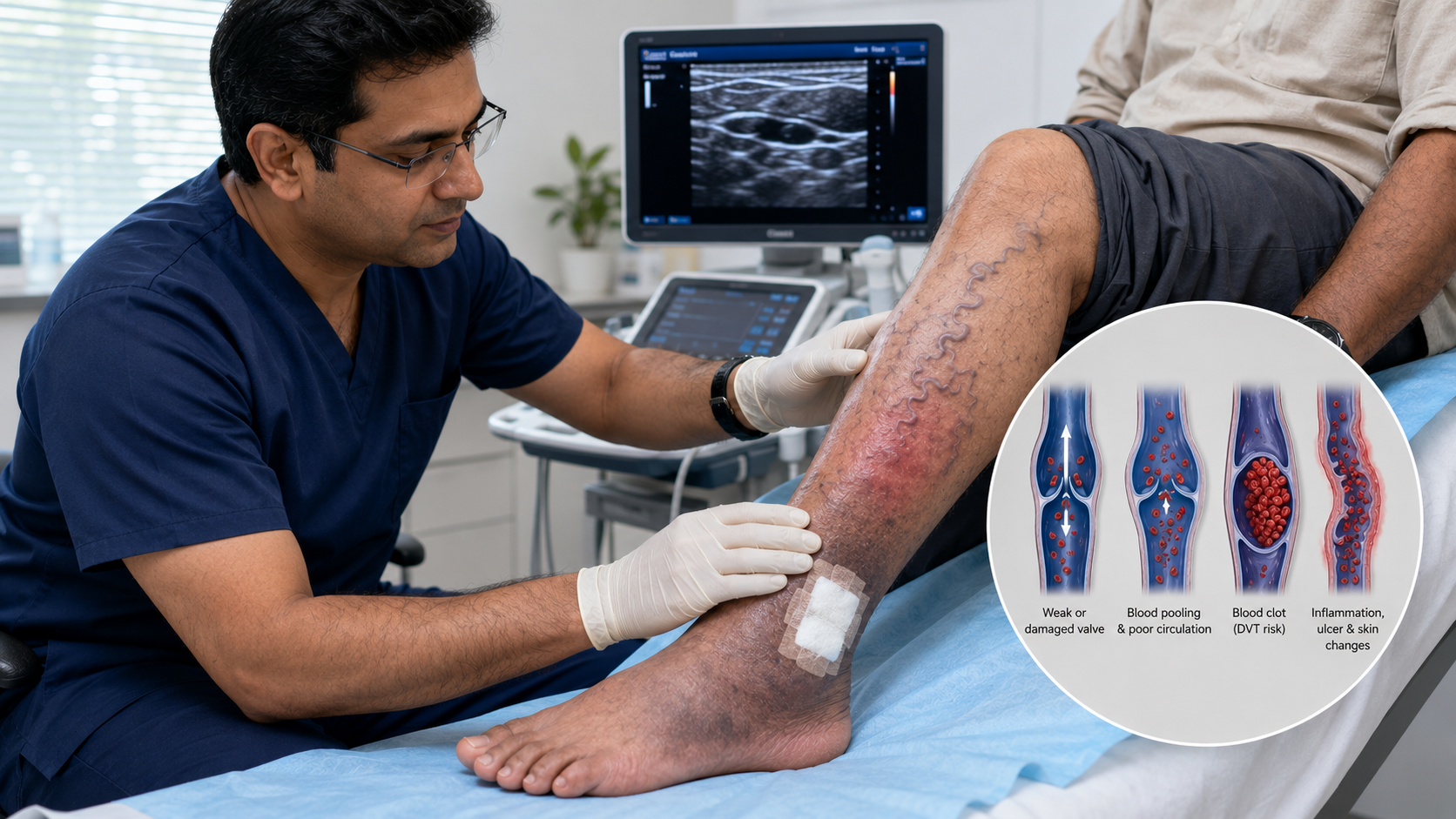
Varicose veins develop when the valves inside the veins weaken, allowing blood to pool instead of flowing efficiently back toward the heart. Over time, this pooling increases pressure within the vein and the surrounding tissue. If left unmanaged, this sustained pressure can damage the skin, weaken the vein wall further, and disrupt normal circulation in ways that go beyond simple discomfort.
Complications don't develop overnight—they typically progress gradually, often over months or years of untreated venous insufficiency. This is why recognizing early warning signs and seeking timely care is so important in preventing more serious outcomes.
Complications of Varicose Veins
Ulcers: Varicose veins can cause skin ulcers, which are open sores that can be painful and difficult to heal. These typically develop near the ankles, where blood pooling and pressure are most concentrated, and are often preceded by skin discoloration, thinning, or hardening in the affected area. If you have a skin ulcer on your leg, it's important to seek medical attention, as venous ulcers can become infected and are often slow to heal without proper treatment.
Blood Clots: Varicose veins can increase the risk of blood clots, which can be life-threatening if they travel to the lungs. A clot that forms in a deeper vein—known as deep vein thrombosis (DVT)—can potentially break loose and cause a pulmonary embolism, a medical emergency. If you experience sudden swelling, pain, or warmth in your leg, seek medical attention immediately, as these can be signs of a developing blood clot.
Bleeding: Varicose veins can sometimes bleed if they are injured or irritated, since the walls of these veins are often thinner and more fragile than healthy veins, sitting closer to the surface of the skin. If you experience bleeding from a varicose vein, apply firm pressure to the area, elevate the leg if possible, and seek medical attention, especially if the bleeding is heavy or doesn't stop within a few minutes.
Superficial Thrombophlebitis: In addition to the complications above, varicose veins can sometimes become inflamed and form small clots close to the skin's surface, a condition known as superficial thrombophlebitis. This typically causes redness, tenderness, and a firm, cord-like feeling along the vein, and while usually less dangerous than deep vein clots, it still warrants medical evaluation.
When to Seek Medical Attention
If you experience any of the following symptoms, it's important to seek medical attention promptly:
Sudden swelling, pain, or warmth in your leg — this combination of symptoms can indicate a blood clot and should never be ignored, particularly if it occurs suddenly and in one leg only.
Skin ulcers on your leg — any open sore near the ankle or lower leg that doesn't begin healing within a few days needs professional wound assessment.
Bleeding from a varicose vein — even minor bleeding from a varicose vein should be evaluated, since fragile veins can bleed again if the underlying issue isn't addressed.
Redness or inflammation around a varicose vein — this may signal infection or thrombophlebitis and should be checked by a specialist.
Pain or discomfort that interferes with your daily activities — persistent pain that limits walking, standing, or sleeping is a sign that the condition has progressed beyond what home care alone can manage.
What Happens During a Medical Evaluation
When you consult a vein specialist for a suspected complication, the evaluation typically begins with a physical examination of the affected leg, followed by a Doppler ultrasound scan to assess blood flow and check for the presence of clots. This non-invasive imaging allows the specialist to see exactly which veins are affected and how severe the underlying venous insufficiency has become.
Based on these findings, your specialist can recommend an appropriate treatment plan—ranging from wound care and compression therapy for ulcers, to minimally invasive procedures such as laser therapy, radiofrequency ablation, foam sclerotherapy, or glue therapy to close off the underlying faulty vein and prevent recurrence.
In certain cases, newer techniques such as MOCA, microwave laser therapy, HIFU, or steam ablation may also be considered, depending on the size, depth, and location of the affected veins.
Preventing Complications
While not all complications can be entirely prevented, timely treatment of varicose veins significantly reduces the risk of ulcers, clots, and bleeding. Wearing compression stockings as recommended, staying physically active, elevating the legs when resting, and avoiding prolonged periods of standing or sitting can all help reduce pressure on the veins over time.
Most importantly, don't wait for symptoms to become severe before seeking care. Early treatment of varicose veins, before complications develop, is generally simpler, faster, and more comfortable than addressing an ulcer, clot, or bleeding episode after the fact.
Conclusion
In conclusion, varicose veins can lead to complications that require medical attention, including ulcers, blood clots, bleeding, and inflammation. While these complications are not common in every case, they are serious enough that any warning signs should never be ignored.
If you experience any symptoms of varicose vein complications, it's important to talk to a Vein Specialist like Dr. Shoaib Padaria to determine the best treatment plan for you. Prompt evaluation and treatment can prevent complications from progressing and help restore both comfort and long-term vein health.