Introduction
Varicose veins are a common problem that affects many people, and there are many myths surrounding them. These misconceptions often lead people to delay treatment, dismiss real symptoms, or make lifestyle choices based on inaccurate information.
In this article, Dr. Shoaib Padaria, the leading Vein Specialist in the country and the Pioneer of Laser treatment for varicose veins in the country, addresses some of the most common myths about varicose veins and provides you with the facts, so you can make informed decisions about your vein health.
Myth 1: Varicose Veins Are Just a Cosmetic Issue
Fact: Varicose veins are not just a cosmetic issue. They can cause a range of symptoms, including pain, swelling, and itching, which can interfere with daily activities and quality of life. In severe cases, they can lead to skin changes and even ulcers.
This myth is one of the most damaging, as it often leads people to postpone seeking treatment until symptoms become significantly worse. In reality, varicose veins are a visible sign of an underlying circulatory issue that deserves proper medical attention, not just an appearance concern.
Myth 2: Only Women Get Varicose Veins
Fact: Although women are more likely to develop varicose veins than men, men can also get them. In fact, up to 45% of men will develop varicose veins at some point in their lives, a figure that surprises many people given how strongly the condition is associated with women.
Because of this misconception, men often delay seeking treatment or fail to recognize their own symptoms as being related to varicose veins, sometimes resulting in more advanced disease by the time they finally consult a specialist.
Myth 3: Crossing Your Legs Causes Varicose Veins
Fact: Crossing your legs does not cause varicose veins. This is a long-standing myth with no real scientific backing. However, sitting or standing for long periods of time can contribute to the development of varicose veins, as prolonged immobility reduces the natural pumping action that helps circulate blood back to the heart.
If you have a habit of crossing your legs, there's no need to worry that it's damaging your veins—but taking regular movement breaks throughout the day is genuinely beneficial for circulation.
Myth 4: Varicose Veins Always Require Surgery
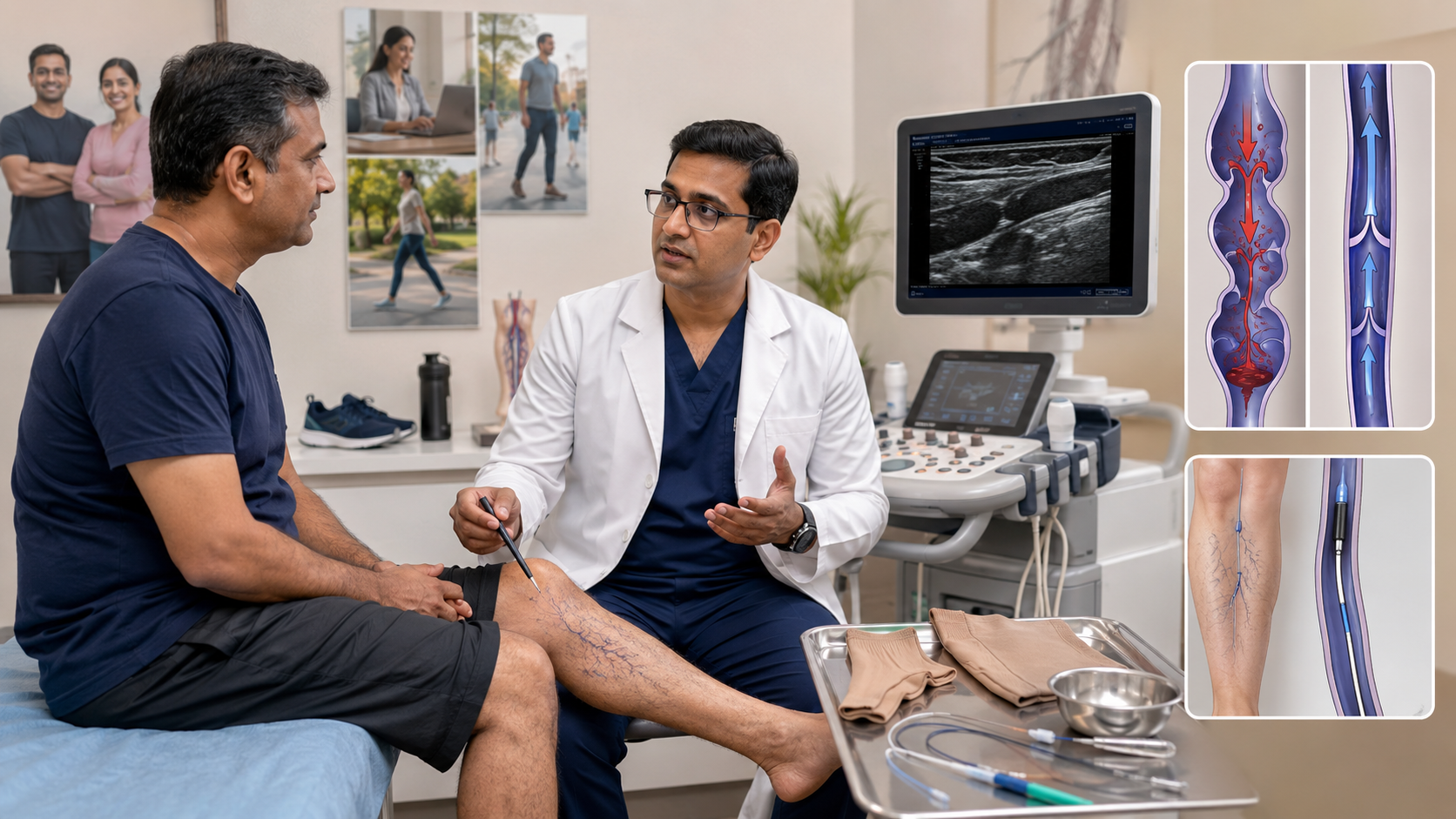
Fact: Surgery is not always necessary for varicose veins. There are many non-surgical treatments available, including compression stockings and lifestyle changes. Newer treatments like laser therapy have revolutionised the treatment of varicose veins, offering effective results without the need for traditional vein stripping surgery.
Today, most patients are candidates for minimally invasive, outpatient procedures such as radiofrequency ablation, sclerotherapy, or glue therapy, which involve little to no downtime compared to surgical alternatives.
Myth 5: Varicose Veins Are a Normal Part of Aging
Fact: Varicose veins are not a normal part of aging. While they are more common in older adults, they can occur at any age, including in young adults and even teenagers in some cases, particularly when there's a strong family history of the condition.
Treating varicose veins as an inevitable, untreatable consequence of getting older often causes people to overlook symptoms that would otherwise prompt them to seek care at a younger age, when treatment tends to be simpler.
Myth 6: Exercise Makes Varicose Veins Worse
Fact: Exercise can actually help improve symptoms of varicose veins. Low-impact exercises like walking and swimming can help improve circulation and reduce swelling by activating the calf muscle pump, which plays a key role in helping blood return to the heart.
The confusion around this myth often stems from high-impact activities like running, which can put extra pressure on the legs and may aggravate symptoms in some patients. Low-impact options remain a safe and beneficial choice for most people with varicose veins.
Myth 7: Varicose Veins Are Caused by High Blood Pressure
Fact: Varicose veins are not caused by high blood pressure. They are caused by weakened or damaged valves in the veins that allow blood to flow backward and pool in the veins, a completely separate mechanism from arterial blood pressure.
While the two conditions are unrelated in cause, both are worth managing independently, as each carries its own set of health implications if left unaddressed.
Myth 8: Varicose Veins Always Come Back After Treatment
Fact: While varicose veins can recur after treatment, the likelihood of recurrence is much lower with modern treatments like endovenous laser treatment (EVLT) and radiofrequency ablation (RFA), which achieve significantly higher long-term success rates than older surgical techniques.
Additional advances such as MOCA, microwave laser therapy, HIFU, and steam ablation continue to improve outcomes further, giving patients more confidence in the durability of modern vein treatments.
Why Myths Like These Persist
Many of these misconceptions have been passed down informally for generations, often without any grounding in medical evidence. Because varicose veins are so visually apparent, they tend to attract a lot of casual, unverified advice from well-meaning friends and family, rather than accurate information from medical professionals.
The best way to separate fact from fiction is to rely on guidance from a qualified vein specialist, who can assess your specific condition and provide advice based on current medical understanding rather than outdated assumptions.
Conclusion
In conclusion, there are many myths surrounding varicose veins, but it's important to know the facts. From misunderstanding who's affected to underestimating the seriousness of symptoms, these myths can lead to delayed treatment and unnecessary discomfort.
If you're experiencing symptoms of varicose veins, it's important to talk to a Vein Specialist like Dr. Shoaib Padaria to get accurate information and determine the best treatment plan for you.