
Introduction
Varicose veins are a common condition that can cause discomfort and pain, especially if left untreated. While there are many treatment options available, prevention is always the best course of action, particularly for those who know they're at higher risk due to family history, occupation, or lifestyle.
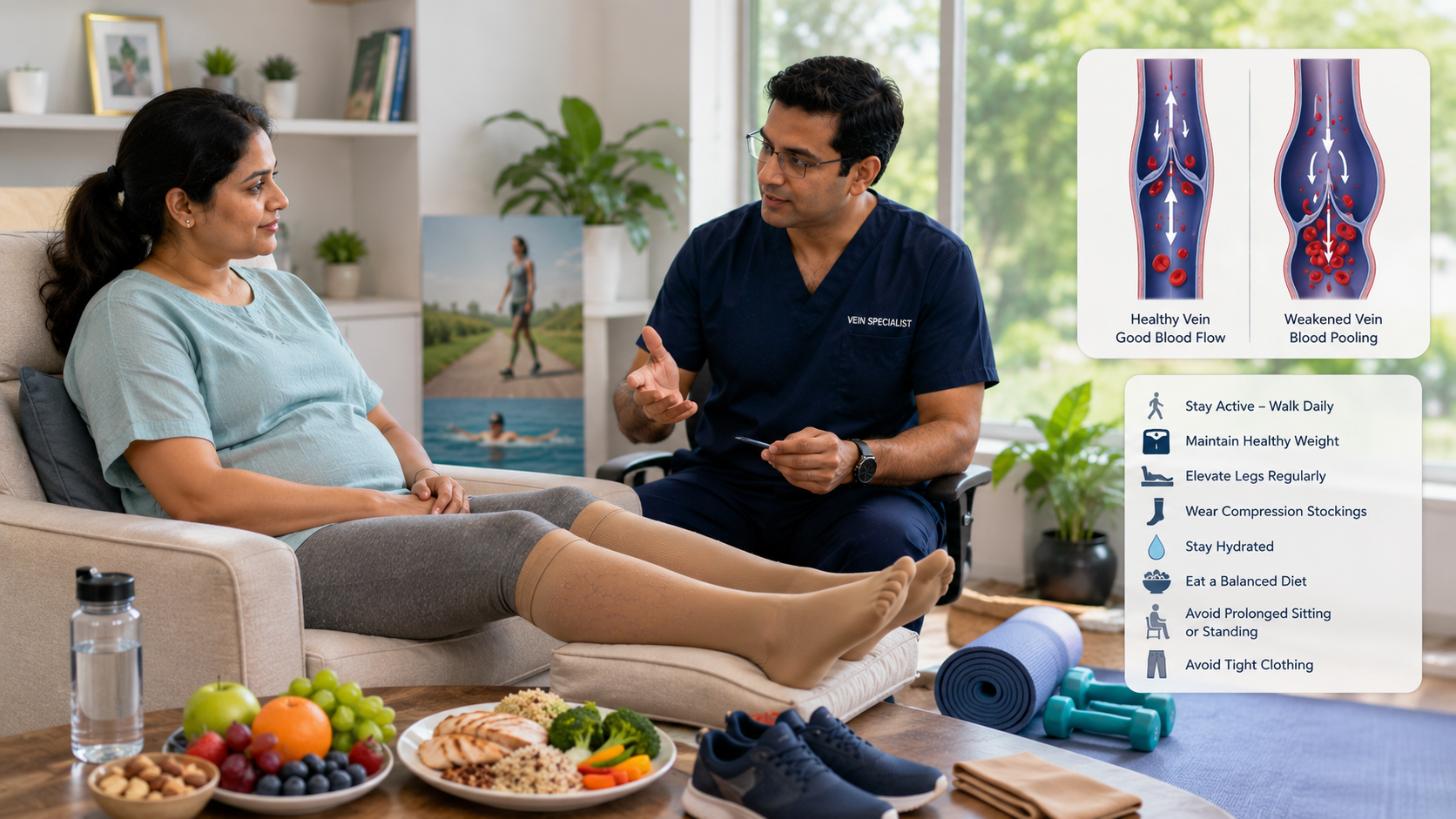
Making simple lifestyle changes can help to reduce your risk of developing varicose veins and promote healthy vein health. Leading Vein Specialist in the country, Dr Shoaib Padaria, recommends the following lifestyle changes to prevent varicose veins.
Why Prevention Matters
Varicose veins develop gradually, often over years of sustained pressure and weakening valves within the veins. This means that many of the everyday habits we don't think twice about—how long we stand, what we wear, how active we are—can quietly influence our long-term vein health.
While genetics play a significant role and can't be changed, a large portion of an individual's overall risk is shaped by lifestyle factors that are entirely within their control. Adopting healthy habits early, especially for those with a family history of varicose veins, can meaningfully delay or reduce the severity of the condition later in life.
Exercise Regularly
Regular physical activity can help to improve circulation in your legs and reduce your risk of developing varicose veins. Try low-impact exercises such as walking, cycling, or swimming, which engage the calf muscles and support the natural pumping action that helps blood return to the heart.
Consistency matters more than intensity here—even a daily 20 to 30 minute walk can make a meaningful difference in circulation over time, without placing unnecessary strain on the legs the way high-impact activities might.
Maintain a Healthy Weight
Being overweight or obese can put added pressure on your veins, increasing your risk of developing varicose veins. Maintaining a healthy weight can help to reduce this pressure and promote healthy vein health, easing the workload placed on the valves within your leg veins.
A balanced approach combining regular exercise with a nutritious, whole-food-based diet tends to be the most sustainable way to manage weight over the long term, rather than relying on short-term or restrictive diets.
Elevate Your Legs
If you spend long periods of time sitting or standing, try to elevate your legs whenever possible. This can help to improve circulation and reduce your risk of developing varicose veins, particularly when done consistently at the end of a long day.
Elevating your legs above the level of your heart for 15 to 20 minutes uses gravity to assist blood flow back toward the heart, offering a simple, cost-free way to ease pressure on the veins.
Wear Compression Stockings
Compression stockings can help to improve circulation in your legs and reduce your risk of developing varicose veins. They work by squeezing your legs and helping blood to flow more efficiently, particularly for those whose daily routines involve extended periods of standing or sitting.
For individuals at higher risk—such as those with a family history of varicose veins or occupations requiring long hours on their feet—wearing compression stockings proactively can be a simple, effective preventive measure.
Avoid Tight Clothing
Tight clothing, especially around the waist, groin, and legs, can restrict blood flow and increase your risk of developing varicose veins. Choosing looser, more breathable clothing allows blood to circulate more freely through the lower body.
This is particularly relevant for clothing worn during long commutes, workdays, or travel, where restricted circulation over extended periods can gradually add strain to the venous system.
Additional Everyday Habits That Help
Beyond the core recommendations above, a few additional habits can further support healthy veins. Staying well hydrated helps maintain healthy blood viscosity and circulation, while taking short movement breaks every 30 to 60 minutes during long periods of desk work or travel keeps blood from pooling in the legs.
Alternating between sitting and standing throughout the day, when possible, also helps distribute pressure more evenly across the venous system rather than placing sustained strain on the same veins for hours at a time.
When Prevention Isn't Enough
While these lifestyle changes can significantly reduce your risk and ease early symptoms, they cannot always prevent varicose veins entirely, particularly for those with a strong genetic predisposition. If varicose veins do develop despite your best preventive efforts, know that highly effective treatment options are available.
Dr Shoaib Padaria is the Pioneer of Laser treatment of Varicose veins in the country, with over 23+ years of experience and expertise. At Doctor House Vein Centre, a range of specialized procedures for the treatment of varicose veins are offered, including laser therapy, radiofrequency ablation, foam sclerotherapy, and glue therapy, under the guidance of Dr Shoaib Padaria.
Additional advanced options, including MOCA, microwave laser therapy, HIFU, and steam ablation, are also available, ensuring patients have access to the most suitable treatment for their specific condition.
Conclusion
Preventing varicose veins starts with simple, consistent lifestyle habits—regular exercise, maintaining a healthy weight, elevating your legs, wearing compression stockings when needed, and avoiding tight clothing. Together, these changes support healthy circulation and reduce long-term strain on the venous system.
Our team of experienced professionals is dedicated to providing personalized care and treatment options for all of our patients. If you're concerned about your risk of varicose veins or are already experiencing symptoms, reach out to Doctor House Vein Centre for expert guidance and support.