Introduction
Obesity is a growing problem around the world, and it's also a well-recognized risk factor for varicose veins. As global rates of obesity continue to rise, so too does the prevalence of venous conditions linked to excess body weight.
In this article, we explore the link between obesity and varicose veins and provide practical tips for weight management, as explained by Dr. Shoaib Padaria, one of India's leading Vein Specialists. Understanding this connection can help patients take proactive steps toward both healthier veins and better overall health.
How Obesity Contributes to Varicose Veins
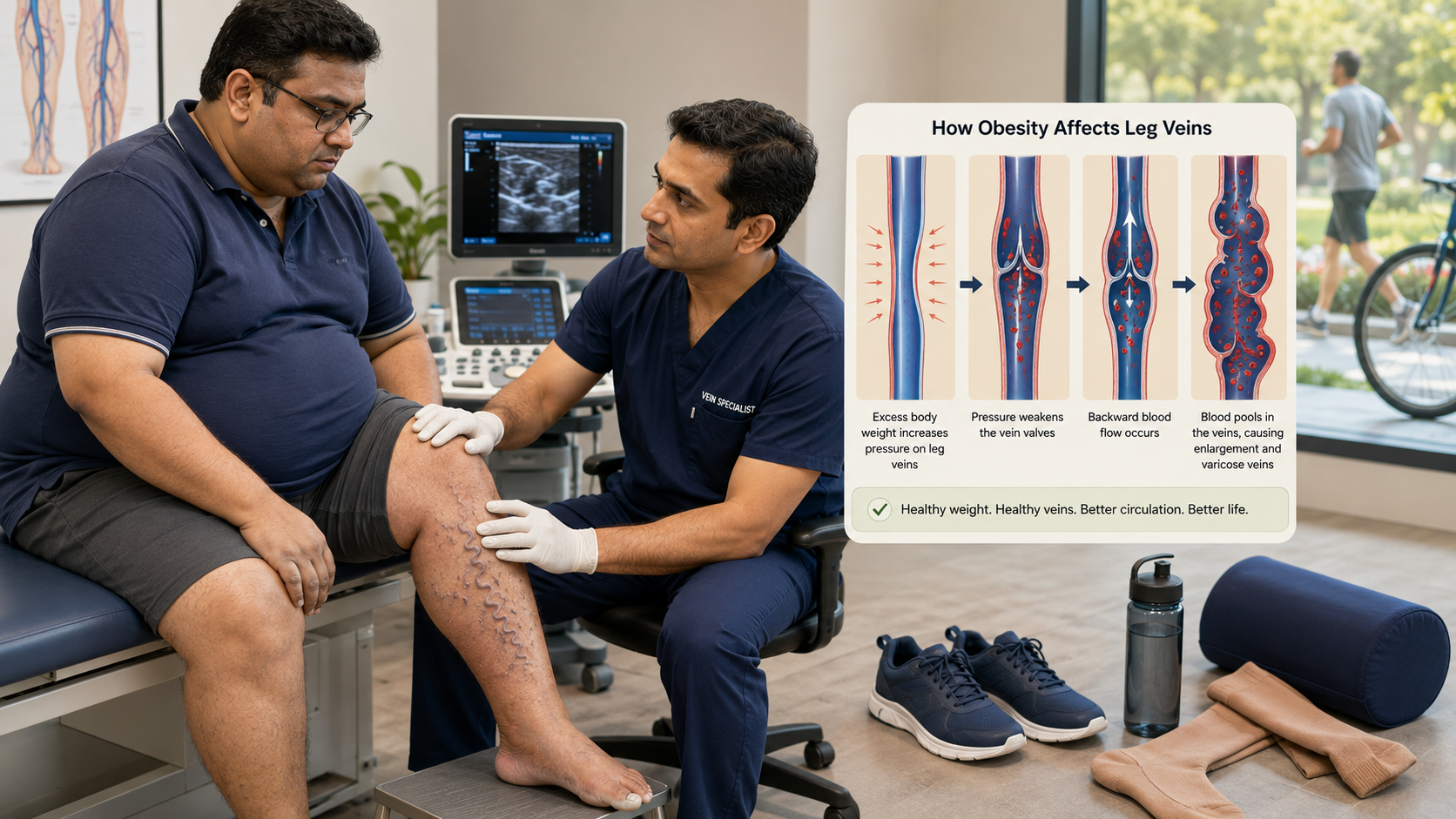
Obesity is a risk factor for varicose veins because excess weight puts extra pressure on the veins in the legs. This constant added pressure forces the leg veins to work harder to push blood back up toward the heart, straining the delicate valves inside them over time.
This can cause the weak valves in the veins to become dysfunctional, and the backward flow into the veins causes enlarged and twisted vessels, leading to varicose veins. Once these valves fail, blood begins to pool rather than flow efficiently, and the affected veins gradually stretch and bulge under the increased volume.
In addition, obesity can also cause inflammation in the body, which can further damage the veins. Chronic low-grade inflammation associated with excess body fat is believed to weaken vein walls over time, compounding the mechanical pressure already placed on the venous system by extra weight.
Why This Connection Matters
The relationship between obesity and varicose veins isn't just about appearance—it's a two-way relationship that can make both conditions harder to manage. Varicose veins can cause leg pain, heaviness, and swelling that make physical activity uncomfortable, which in turn can make weight management more difficult, creating a cycle that's hard to break without deliberate lifestyle changes.
Recognizing this link early allows patients to address both issues together, rather than treating varicose veins in isolation while excess weight continues to place ongoing strain on the venous system.
Weight Management Tips in Obese Patients with Varicose Veins
Exercise regularly: Exercise is one of the most effective ways to manage weight and improve circulation in the legs. Low-impact exercises like walking, swimming, and cycling are great options for people with varicose veins. Regular exercise causes the calf muscles to pump out the blood from the veins of the legs towards the heart more effectively, easing pressure on weakened valves.
Maintain a healthy diet: Eating a healthy diet that is rich in fruits, vegetables, lean proteins, and whole grains can help you maintain a healthy weight and reduce your risk of varicose veins. Reducing intake of processed foods and excess salt also helps limit fluid retention, which can otherwise worsen leg swelling.
Avoid sitting or standing for long periods of time: Sitting or standing for long periods of time can put extra pressure on the veins in the legs. If you have a job that requires you to sit or stand for long periods of time, try to take breaks and move around whenever possible, as even brief movement helps activate circulation.
Elevate your legs: Elevating your legs can help improve circulation in the legs and reduce swelling. Try to elevate your legs above your heart for 15–20 minutes several times a day, especially after long periods of standing or exercise.
Wear compression stockings: Compression stockings are a type of tight-fitting hosiery that help improve circulation in the legs. They work by applying pressure to the legs, which helps to reduce swelling and prevent blood from pooling in the veins, and can be especially helpful for those carrying extra weight.
Setting Realistic, Sustainable Goals
Weight loss doesn't need to be dramatic to make a meaningful difference for vein health. Even a modest reduction in body weight can noticeably ease the pressure placed on leg veins, helping to reduce symptoms like aching and swelling. Gradual, sustainable changes to diet and activity levels tend to be more effective long-term than restrictive approaches that are difficult to maintain.
For patients with existing varicose veins, low-impact exercise is particularly important, as high-impact activities can sometimes aggravate symptoms. Working with a healthcare provider to design a safe, effective exercise and weight management plan ensures progress doesn't come at the cost of vein health.
When to Seek Treatment Alongside Weight Management
While weight management can help slow the progression of varicose veins and ease symptoms, it may not be enough to resolve veins that have already become significantly enlarged or symptomatic. In these cases, medical treatment alongside lifestyle changes often provides the most effective, lasting relief.
Minimally invasive treatments such as laser therapy, radiofrequency ablation, foam sclerotherapy, and glue therapy can close off problematic veins with minimal downtime, allowing patients to continue their weight management journey more comfortably.
Additional options, including MOCA, microwave laser therapy, HIFU, and steam ablation, offer further choices depending on vein size, depth, and severity.
Conclusion
In conclusion, obesity is a risk factor for varicose veins, but there are many things you can do to manage your weight and reduce your risk. Regular exercise, a balanced diet, movement breaks, leg elevation, and compression stockings can all contribute to healthier veins and improved overall wellbeing.
If you're experiencing symptoms of varicose veins, it's important to talk to a Vein Specialist like Dr. Shoaib Padaria to determine the best treatment plan for you.